


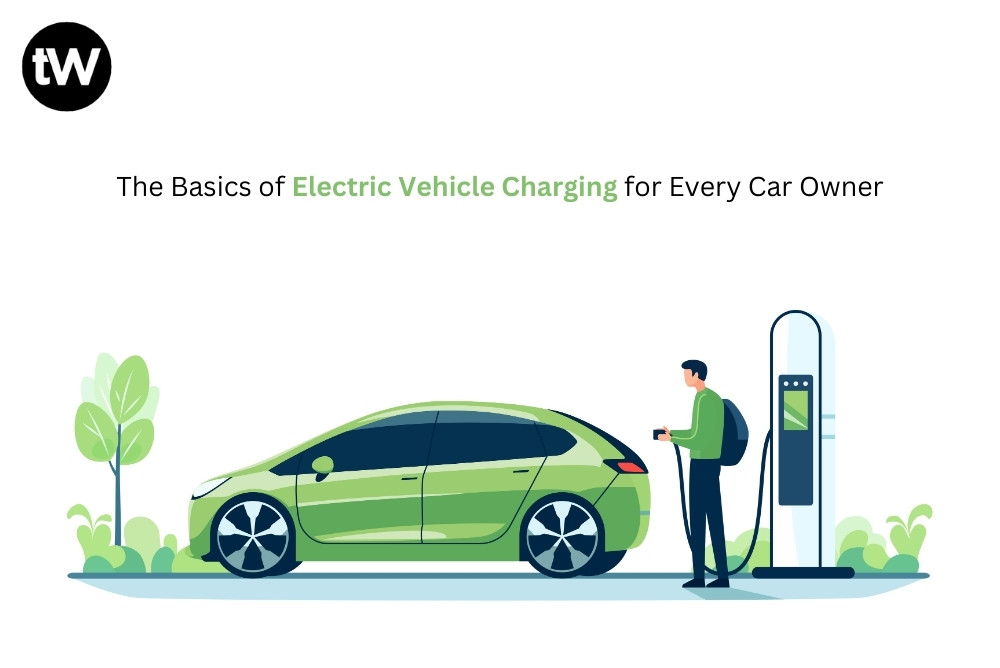
Electric vehicles (EVs) are now a part of modern transportation. If you are considering an EV, understanding how electric vehicle charging works is essential for an efficient and cost-effective experience. In this blog, we discuss the basics of EV charging, including what it is, how it differs from traditional petrol vehicles, types of chargers, charging times, costs, and more.
What is Electric Vehicle Charging?
It transfers electrical energy from a charging station to your EV’s battery. This energy powers the electric motor that drives the car. Charging an EV involves connecting the car to a power source, either at home or a public charging station, and letting it replenish the battery until it’s ready to go.
Difference Between Electric Vehicles and Petrol Vehicles
The primary difference between electric and petrol vehicles lies in how they operate. Petrol vehicles have combustion engines which are powered by fossil fuels, while electric vehicles run entirely on electricity stored in a battery. EVs generally require less maintenance. Oil changes, exhaust systems, or fuel pumps are unnecessary. Petrol vehicles emit harmful pollutants but EV has zero emissions which is a sustainable solution.
AC vs. DC Electric Vehicle Charging
Regarding EV charging, electrical current is of two types: AC and DC. Most home chargers use AC power. The onboard charger of the car transforms AC electricity into DC so that the battery can store it. AC charging tends to be slower compared to DC charging.
DC chargers bypass the charger and directly supply DC power to the battery. This results in much faster charging times which makes DC charging stations ideal for public locations.
Dynamic Wireless Charging
Electric cars can be charged wirelessly without having to be physically plugged into a charging station. This technique, called dynamic wireless charging, transfers power from a charging pad buried in the road to a receiver on the car via electromagnetic fields. While this technology is under development, it could improve how we charge our EVs.
Types of Electric Vehicle Chargers

Electric vehicle chargers are designed for different needs and charging speeds:
Level 1 Charger (Standard AC Charging)
Power Output: 120V
Charging Speed: Slow
Where You Use It: Home with a regular electrical outlet.
Best For: Short-distance commute
Level 2 Charger (Faster AC Charging)
Power Output: 240V
Charging Speed: Faster
Where You Use It: Home installations or public charging stations.
Best For: Daily commuters or anyone who needs faster charging times.
DC Fast Charger (Level 3)
Power Output: 400V-800V
Charging Speed: Very fast
Where You Use It: Public charging stations.
Best For: Long road trips.
How to Charge Your EV
Charging your EV is simple, but the process can vary depending on where you’re charging:
Home Charging:
Most EV owners install a Level 2 charger at home, which takes a few hours to charge the battery fully. If you have to use your EV in the morning, you can plug your car in overnight.
Public Charging:
Use apps like PlugShare or ChargePoint to locate charging stations. Level 2 and DC fast chargers are available in public areas. Public stations may require a membership or payment card to use.
Workplace Charging:
Many employers are now installing EV chargers at their work sites. If your employer offers this service, charge at work.
Charging Times and Costs
The charger type, charging rate, and battery capacity of your EV all affect charging timeframes. Here’s a rough estimate for a full charge:
Level 1 Charger: 12-24 hours
Level 2 Charger: 4-8 hours
DC Fast Charger: 30-60 minutes
Depending on your electricity tariffs, charging an EV at home costs between $0.10 and $0.30 per kWh. Public charging stations may charge by the kWh per minute or via a flat fee.
Tips for EV Owners
- Overnight or off-peak hours, when electricity prices are cheaper, are good times to charge your EV.
- Regularly check your battery’s health through your car’s app or dashboard.
- Use apps or GPS systems that show charging station locations.
- It is preferable to unplug an EV when it is fully charged.
Conclusion
Electric vehicle charging is an easy and straightforward process, but understanding the basics of how it works is important for any EV owner. Whether you are charging at home, using public stations, or preparing for a road trip, knowing the different types of chargers, charging times, and costs will be helpful for you.
